


Key Takeaways
- TMD often shows up as jaw soreness near the ear, clicking sounds, headaches, and tight neck muscles.
- Short flare-ups from overuse can calm down with rest and soft foods.
- Pain lasting more than two weeks or a jaw that locks needs a closer look.
- Your dentist can check your bite, review jaw movement, and talk through daily habits.
- Night guards, bite adjustments, and jaw relaxation guidance are common care options.
What TMD Can Feel Like
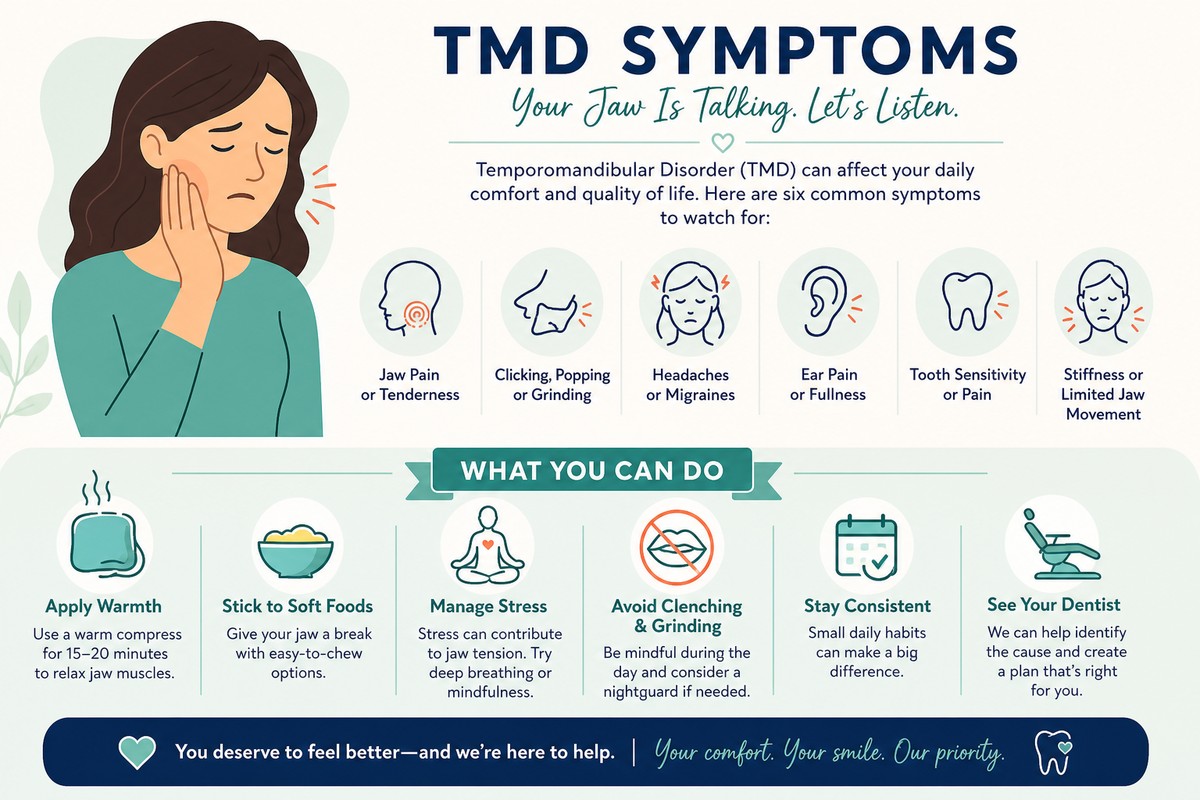
Jaw soreness can make everyday movements like chewing, talking, or yawning uncomfortable. TMD, or temporomandibular disorder, describes problems affecting the jaw joints and surrounding muscles. Symptoms can include soreness near the ear, clicking or popping when you chew, headaches, or jaw muscles that feel tired by the end of the day. Wildwood Family & Cosmetic Dentistry can help sort out what is driving those symptoms.
Some mild jaw discomfort related to TMD can improve with rest and short-term habit changes, but pain that lasts for weeks or limits how wide you can open usually needs a professional evaluation.
Common Triggers Behind Jaw Discomfort
Teeth grinding and clenching are frequent culprits, and many people do both without realizing it. Stress, posture, and chewy foods can add to the strain. Bite changes after dental work can also leave your jaw working differently than it used to. Grinding often happens overnight, so morning soreness may be one of the first clues.
When Jaw Symptoms Fade on Their Own
Not every short episode of jaw discomfort means something serious is happening. A long dental appointment, extra chewing, or a stretch of poor sleep can leave your jaw sore for a few days.
Short flare-ups after overuse often settle down. Mild strain from chewing gum or crunching ice can follow the same pattern. Rest may calm the joint and surrounding muscles, and you may notice clicking quiets down once you reduce strain. Many mild TMD concerns respond to simple self-care in the early stages.
Habits That Help at Home
Small adjustments can make a real difference while your jaw recovers.
- Stick with soft foods for a few days, such as eggs, soup, and pasta.
- Apply a warm compress and rest your jaw between meals.
- Take smaller bites and avoid opening your mouth wider than necessary.
Signs Your Jaw Needs a Closer Look
There is a point where waiting stops being helpful. If any of these signs sound familiar, it is time to schedule a visit.
- Pain that lasts more than two weeks or keeps coming back.
- A jaw that locks, catches, or won’t open as wide as it used to.
- Teeth that look worn or chipped, or feel newly sensitive.
Worn enamel and chipped edges can point to grinding you have not noticed. Catching those signs early can help protect healthy tooth structure, while restorative treatment can address damage that has already occurred. Sudden, sharp pain or a jaw injury may require emergency dental care and should not wait.
How Your Dentist Evaluates TMD
An evaluation starts with a conversation and a careful exam. Your dentist checks how your teeth come together and watches how your jaw moves as you open, close, and shift side to side. Routine exams can also catch early signs of grinding or bite strain.
You can also talk through daily habits and sleep patterns, since clenching can happen overnight or during a stressful workday. Your dentist may take images when more detail is needed. That full picture helps guide a starting point instead of guessing.
Care Options Your Dentist May Suggest
A custom night guard is a common recommendation, and it is made to fit the shape of your teeth rather than a generic mold. Bite adjustments may help when your teeth are not meeting evenly. Jaw relaxation guidance can also give you specific steps to use at home, so you are not simply waiting for soreness to pass.
Your dentist can walk you through which options make sense for your situation.
Answers to Common TMD Questions
TMD can return after it settles. Symptoms may come back during stressful stretches or if grinding habits return, which is why ongoing home care can be helpful.
Stress makes symptoms worse for many people. Clenching tends to increase when you’re tense, and that extra muscle work can leave your jaw aching. Jaw pain from TMD can be temporary or longer-lasting, depending on what’s behind it.
The time it takes to feel relief varies. Mild strain may ease within a week, while jaw discomfort tied to grinding or bite issues often improves gradually over several weeks with the right support.
If jaw pain, clicking, or limited movement has lasted more than a couple of weeks, Wildwood Family & Cosmetic Dentistry can take a look and help you understand what may be causing it. Call to schedule an evaluation at our Toledo or Sylvania location.