

Key Takeaways
- Blood on floss often points to plaque along the gumline.
- New or on-again, off-again flossing habits can lead to bleeding.
- Snapping floss or using stiff bristles can irritate gum tissue.
- Hormone shifts and some medications can play a role.
- Bleeding that lasts beyond two weeks deserves a dental visit.
The Short Answer About Bleeding Gums
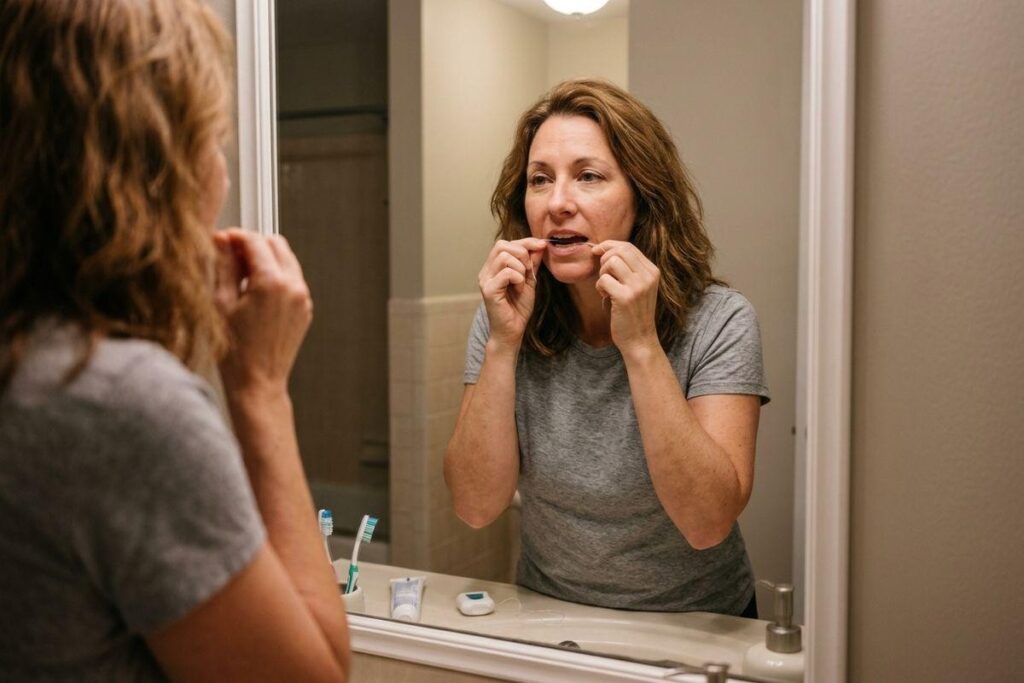
You slide floss between two back teeth, pull it out, and notice blood on the string. It can make you wonder whether flossing is helping or making things worse.
Most of the time, gums bleed during flossing because plaque has built up along the gumline and the tissue is irritated. The fix usually starts with gentler technique and steady habits, and sometimes a professional cleaning at Wildwood Family & Cosmetic Dentistry.
What Bleeding Gums Usually Mean
Plaque collects where your toothbrush tends to miss, especially along the edge where the gum meets the tooth. When it sits there, gum tissue can become inflamed and bleed more easily.
It’s also a sign your gums want consistent care rather than a break. Skipping floss because your gums bleed tends to keep the cycle going.
Signs to Watch For
Bleeding rarely shows up alone, so keep an eye out for these signs.
- Red or puffy gums
- Tenderness while you brush
- Bad breath that hangs around after brushing
Common Reasons Your Gums Bleed
New or Irregular Floss Habits
If you just started flossing again, your gums are adjusting. The same goes for long gaps between sessions. Daily rhythm tends to settle things down.
Technique & Tool Issues
Snapping the floss straight down can catch the gum tissue and leave it sore, and stiff brush bristles can do the same thing along the gumline. Softer contact usually feels better within a few days.
Hormones, Health & Medications
Pregnancy and other hormone shifts can make gums more sensitive to plaque. Blood thinners and certain other medicines can also make bleeding show up more easily. Mentioning your medication list at your next visit helps your dentist understand what may be contributing.
How to Floss Without Gum Soreness
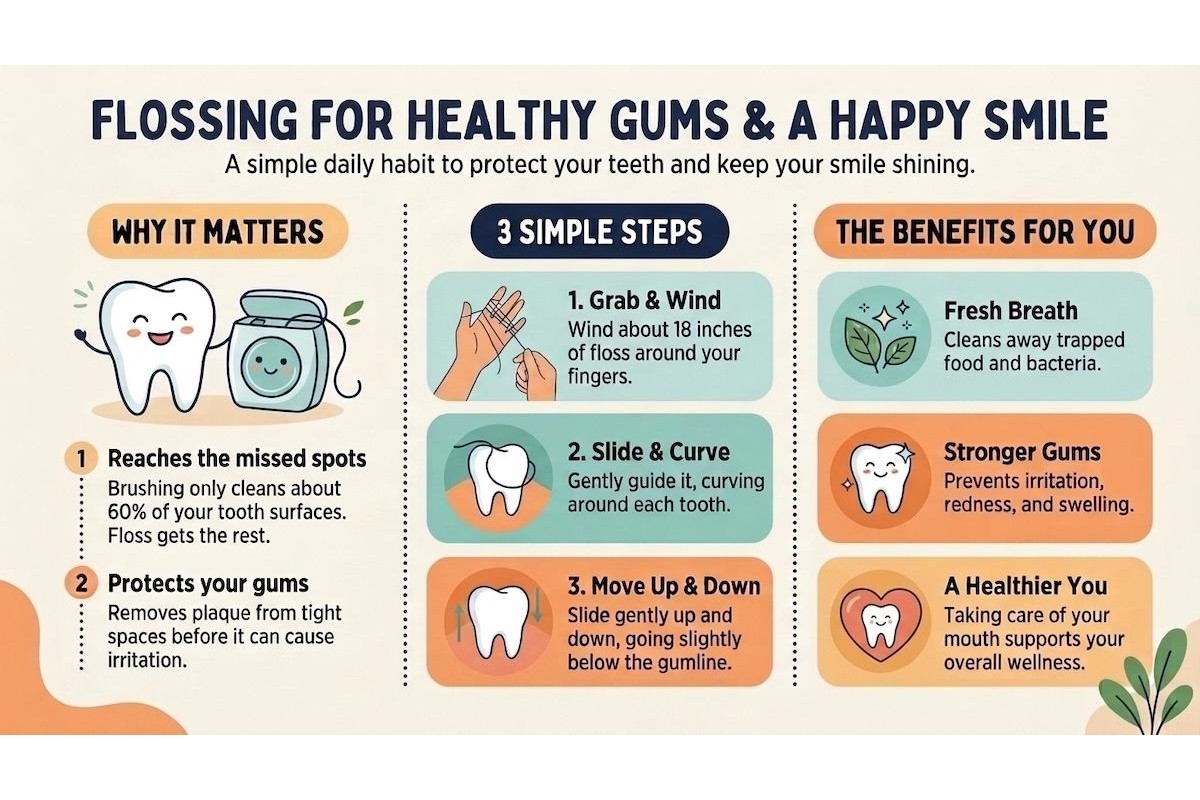
Technique makes more difference than pressure. Try this at the bathroom mirror tonight.
- Curve the floss into a C shape around the side of each tooth.
- Slide it gently just below the gumline instead of snapping it down.
- Move to a fresh section of floss for each tooth.
Tools That Make It Easier
The right tool can make daily cleaning easier and more consistent.
- Floss picks can help when standard floss is hard to manage.
- Water flossers help around braces and tight spots.
- Soft bristle brushes are kinder to gum tissue.
When to Call Your Dentist
Some bleeding settles once your habits even out. Other signs call for a professional look, especially if you notice any of these.
- Bleeding that keeps going past two weeks of steady flossing
- Gums pulling away from your teeth
- Loose teeth or a bite that feels like it’s shifting
Your hygienist can check what is happening below the gumline and help you sort out the cause.
How Wildwood Family & Cosmetic Dentistry Can Help
Cleanings & Gum Care
A cleaning clears the plaque and hardened tartar your brush can’t reach. When gums need more attention, deep cleaning options can help address buildup below the gumline.
Visits That Fit Your Schedule
With two locations, Wildwood Family & Cosmetic Dentistry can help you find a visit time that fits your schedule. Your dentist can also walk you through home care tips you can realistically keep up with.
Bleeding gums are worth paying attention to, and they are often easier to manage when you address them early. Schedule a visit with Wildwood Family & Cosmetic Dentistry to get your gums checked and your home care routine back on track.