

A missing tooth does more than just create a gap in your smile; it often dictates what you eat and how you feel in social settings. You might find yourself passing on crisp apples or carefully shifting food to one side to avoid discomfort. If you are looking to regain that sense of ease, whether you’re enjoying a meal or posing for a family photo, modern restorative options can help.
Dental implants provide a stable, long-term foundation for replacement teeth, with the ability to last around 25 years with proper care. Designed to mimic the function of a natural root, they offer a sturdy solution that integrates with your lifestyle. Their longevity is closely tied to consistent oral hygiene and regular professional visits, making a dedicated daily routine the best way to maintain your investment in your oral health.
Implant Lifespan
With proper care and maintenance, dental implants are designed to be a long-term solution, with the titanium post often lasting 25 years or more.
While the implant itself (the “root”) is highly durable, the restoration attached to it, such as a crown or bridge, typically experiences more wear and tear and may need replacement every 10 to 15 years.
Several factors influence the overall longevity of the restoration:
- Oral hygiene: Just like natural teeth, implants rely on healthy surrounding tissue. Consistent brushing and flossing are necessary to prevent peri-implantitis, a form of gum disease that can cause the implant to fail.
- Bone health: The implant requires a stable foundation. Maintaining bone density through overall health and regular dental visits helps keep the post secure.
- Lifestyle habits: Habits like smoking or using your teeth as tools can put undue stress on the restoration and the jawbone, potentially shortening the lifespan of the implant.
- Placement and integration: The success of the initial “osseointegration,” where the bone fuses with the titanium, is a primary factor in how long the implant stays functional.
The 3 Parts of Your Dental Implant
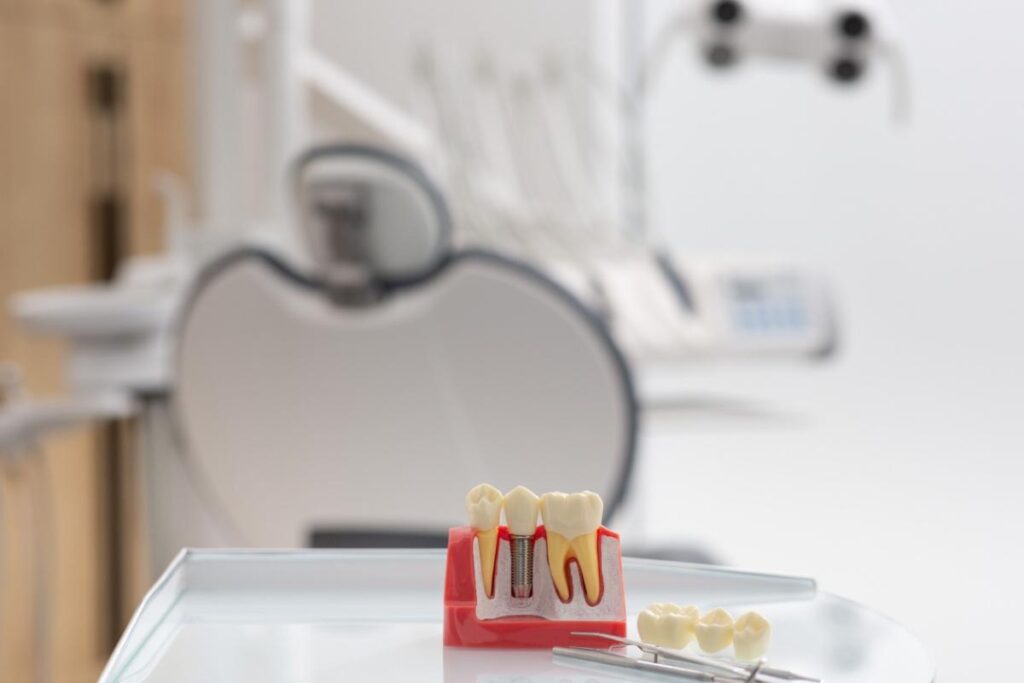
Think of a dental implant as a team effort; 3 specific parts work together to give you back the look and feel of a natural tooth.
The Implant Post
This is the foundation. It’s a small, sturdy titanium post that sits under the gum line, acting like a new root for your tooth. Over time, it actually fuses with your jawbone, creating a rock-solid anchor that keeps everything steady.
The Abutment
The abutment is a small connector piece that sits atop the implant post. Its primary role is to serve as the bridge between the hidden anchor and the visible tooth. By securely holding the restoration in place, it helps your new tooth remain stable during daily activities.
The Custom Crown
The crown is the only visible portion of the implant, designed to match the shape and shade of your natural teeth. While crafted from resilient materials like porcelain to handle the pressure of chewing, this component experiences the most wear and tear. Because it is the most exposed part of the system, the crown may eventually need to be replaced due to long-term use or accidental damage, though the underlying post and abutment typically remain intact.

The Placement & Recovery Phase
The first step involves placing the implant post into the jaw. To help you stay comfortable, we use local numbing so you can feel at ease throughout the visit. If the missing tooth is in a visible area, we can often place a temporary restoration so you can keep smiling confidently while your mouth heals.
Over the next few months, your jawbone naturally bonds with the post, creating that sturdy foundation for your final tooth. During this time, it’s best to stick to softer favorites like yogurt, pasta, or mashed potatoes to give the area plenty of space to heal. While it takes a little patience, this vital healing phase is what makes your new smile feel stable and natural in the long run.
Simple Habits to Protect Your Smile
Maintaining your smile is all about consistent, simple habits. Brushing twice a day helps clear away plaque before it has a chance to build up, while flossing daily reaches those hidden spots between teeth to keep your gums in great shape. Since healthy gums provide the essential support your implant needs, these quick steps are the best way to protect your investment.
Regular dental visits are just as important for catching small changes before they become bigger issues. Coming in for a professional cleaning every 6 months allows your dental team to use specialized tools designed to clean around your restoration safely. These checkups help keep your gums healthy and your smile looking its best.
When to Replace or Repair Your Dental Work
Even the most durable materials sometimes need a little attention. Life happens, whether it’s a sudden impact during a game or the natural wear and tear from grinding your teeth at night. Over time, these factors can slightly shift how your restoration fits or feels. If your bite starts to feel a bit uneven, it’s usually a sign that a quick adjustment is needed to keep everything aligned.
Signs to Call Your Dentist
It is always a good idea to monitor how your smile feels and contact your dental team if you notice any changes. Catching these early helps keep your oral health on track. Watch for these common signals:
- A shifting sensation: Your tooth feels slightly unstable or moves when you’re eating.
- Gum sensitivity: The tissue around the restoration appears puffy, red, or swollen.
- Persistent discomfort: You notice unusual sensitivity or a dull ache when chewing your favorite meals.
Rediscover Your Most Confident Smile
A confident smile makes it much easier to focus on the moments that matter, whether you’re sharing a laugh with friends or posing for a family photo. If you are considering your options for a more complete smile, our team at Wildwood Family & Cosmetic Dentistry provides a welcoming space to explore what works best for your lifestyle.
You can reach out to schedule a consultation whenever you’re ready to discuss your goals and take the first step toward a healthy, functional smile.