

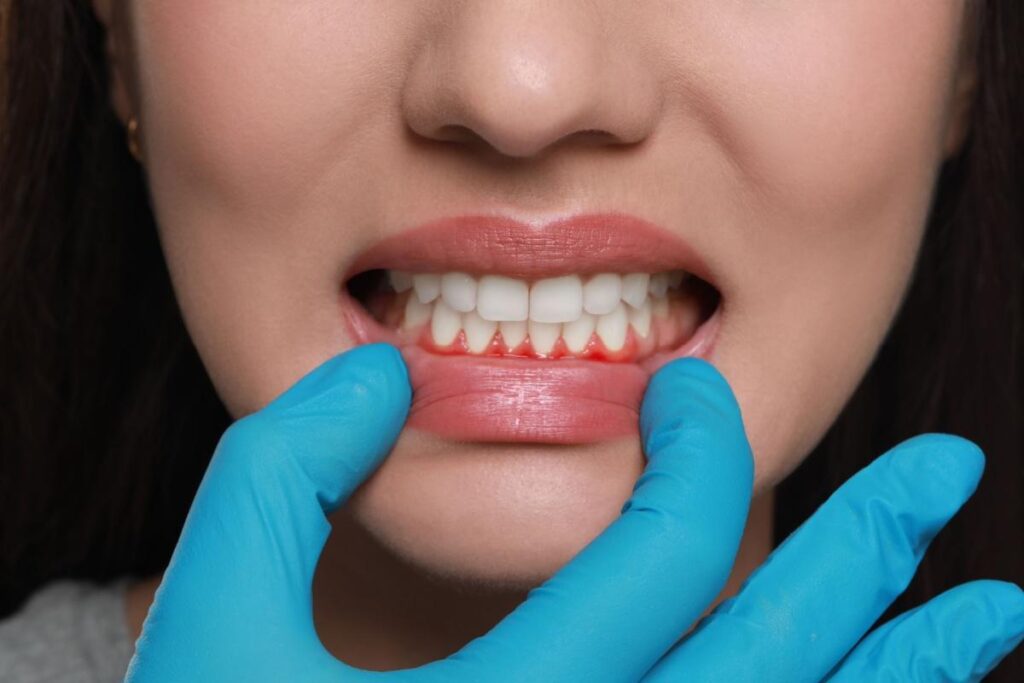
You wake up, head to the bathroom, and grab your toothbrush. As you finish your morning routine, you spit into the sink and notice a bit of pink in the foam. When you run your tongue along your teeth, you may feel a tender, puffy spot right near the gumline. This puffy feeling can make drinking hot coffee or eating cold apples uncomfortable.
Your gums become inflamed when sticky plaque irritates the delicate tissue, though hormone shifts or diet changes can also trigger this tender reaction. Recognizing the signs early can help you find relief quickly.
Signs Your Gums Need Attention
Healthy gums usually look light pink and feel firm against your teeth. When irritation sets in, you may notice a few clear differences, including:
- Color changes: Bright red or dark purple areas instead of light pink tissue
- Bleeding: Red spit in the sink when you brush or floss your teeth
- Sensitivity: Tender spots or puffy pockets that feel sore to the touch
Common Reasons for Swollen Gums
Plaque & Minor Gum Disease
Sticky film builds up along your gumline every single day. When you miss a spot with your toothbrush, that film hardens and traps bacteria against your gums. This trapped food and bacteria can irritate the sensitive tissue.
The irritation can lead to early gum disease. Your body responds to the trapped bacteria by sending more blood to the area. This extra blood flow creates that puffy, sore feeling you notice when you eat.
Hormonal Changes
Your body goes through natural phases that change how your blood circulates. Pregnancy hormones can cause extra blood flow to your gum tissue. This extra flow makes your gums more sensitive to tiny pieces of plaque.
A shift in estrogen during menopause also changes how your mouth feels. Even puberty brings temporary hormone spikes that can make gum tissue tender. These life stages can make your gums act up even if you brush well.
Dental Appliances & Diet
Adjusting to new braces or dentures can be a literal pain, often causing sore spots where they rub against your gums. It’s also easy for things like popcorn kernels to get stuck, and that constant pressure can irritate your gums pretty fast.
Beyond that, what’s on your plate matters. Missing out on fresh fruits and veggies means you’re low on Vitamin C, which your gums need to stay healthy and resilient.

Ways to Calm Gum Discomfort at Home
Gentle Mouth Care
A sore mouth needs a gentle touch to heal. You can help the healing process by brushing twice a day, softly. Hard scrubbing only worsens the irritation and delays recovery.
Switch to a soft-bristle toothbrush right away. Take your time with the floss to carefully lift trapped food pieces away from the gumline. Smooth, easy motions keep your gums safe from accidental cuts.
Simple Relief Steps
A simple saltwater rinse can calm sore areas fast. Stir half a teaspoon of salt into a glass of warm water and swish the mixture around. The warm liquid draws out the swelling and makes your mouth feel cleaner.
Drink plenty of fresh water throughout the day to wash away stray food particles. You should skip spicy foods, sharp chips, and hot soups for a few days. Sticking to soft, mild foods gives your tissue a chance to rest.
Daily Habits for Healthy Gums
Routine Oral Care
Good daily habits keep the puffiness away for good. Spend 2 full minutes brushing your teeth every morning and every night. This gives you enough time to clean every single tooth surface thoroughly.
Change your toothbrush every 3 months or right after you recover from a cold. Frayed bristles leave behind a lot of sticky film. Clean between your teeth daily with floss to catch the food your brush misses.
Smart Lifestyle Choices
Crunchy fruits and vegetables act like tiny scrubbers for your teeth. Apples, celery, and carrots help wipe away film as you chew them. They also give your body the vitamins it needs to repair daily wear and tear.
Try to limit sticky candies and sweet snacks. Sugar feeds the bacteria that cause the puffiness in the first place. You can also stop tobacco use to encourage healthier mouth tissue and better blood flow.
When to Visit a Dentist
Persistent Discomfort
Sometimes, even the best home care needs a little extra help. If a dull ache or sharp pain sticks around for more than a week, it’s a good idea to let a dentist take a look. A lingering issue often points to something deeper that needs a professional eye. When saltwater rinses or gentle brushing aren’t helping, an exam allows us to check below the gumline and find the root cause of the discomfort.
Important Alert Signs
If you’re noticing bad breath that lingers even after a thorough brush, it’s often just bacteria hiding in spots your toothbrush can’t reach. A professional cleaning is usually the best way to clear that out and start fresh.
It’s also worth keeping an eye on your bite; if your teeth feel like they’re shifting or your gums seem to be pulling away, let us know. A quick exam can help us catch any underlying issues and get things back on track.
Come See Us
Taking care of your gums helps keep your smile bright and every meal more enjoyable. Our team at Wildwood Family & Cosmetic Dentistry offers a refined, comfortable atmosphere where everyone feels valued. We love supporting the community through quality care and education. You can call our office today to set up a comfortable consultation for your family.